Latitude: 52.4795 / 52°28'46"N
Longitude: 0.2186 / 0°13'6"E
OS Eastings: 550764
OS Northings: 289150
OS Grid: TL507891
Mapcode National: GBR M5G.G30
Mapcode Global: VHHHS.QYX4
Plus Code: 9F42F6H9+QC
Entry Name: Hundred Foot Pumping Station
Listing Date: 26 February 1985
Grade: II*
Source: Historic England
Source ID: 1160847
English Heritage Legacy ID: 49471
ID on this website: 101160847
Location: East Cambridgeshire, CB6
County: Cambridgeshire
District: East Cambridgeshire
Civil Parish: Downham
Traditional County: Cambridgeshire
Lieutenancy Area (Ceremonial County): Cambridgeshire
Church of England Parish: Downham
Church of England Diocese: Ely
Tagged with: Architectural structure
TL 58 NW DOWNHAM PYMORE
2/18 Hundred Foot Pumping Station
II*
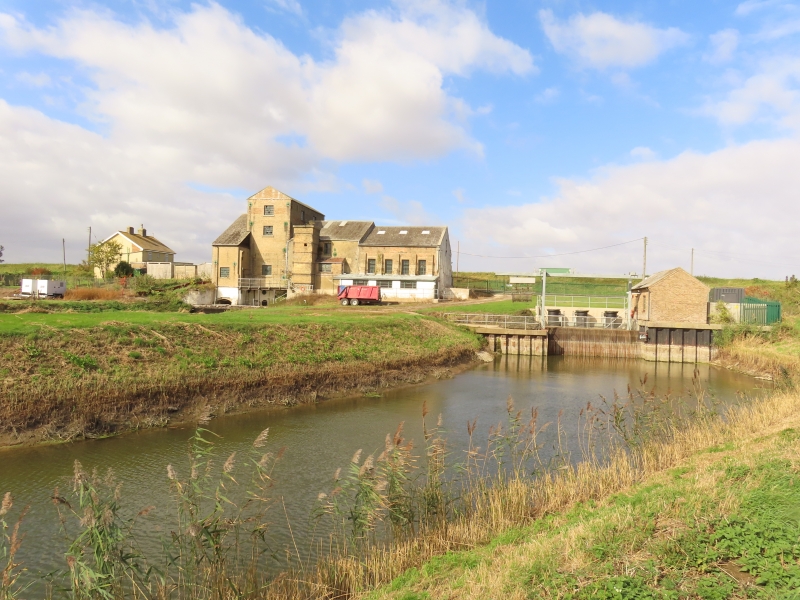
Pumping station. 1830, designed by Joseph Gwynne for the Littleport and Downham Commissioners, replacing a windmill, one of seventy-five in the area. Gault brick, slate and corrugated asbestos roofs. Three storey engine house with wheelhouse to right hand and boiler room and workshop, originally the coking shed, to left hand. Gabled elevation to engine house has double sliding doors at ground floor, and one round arched and one flat arched fixed light windows with cast iron glazing bars at first and second floors; and two plaques inscribed 'These fens have of times been by Water drown'd, Science a remedy in Water found, The power of Steam she said shall be employ'd, And the Destroyer by Itself destroy'd - Erected AD 1830: and 'Littleport and Downham District Commissioners Hundred Foot Pumping stn, 1756 windmill. 1830 Steam engine eight scoop wheel 41ft diameter. 1882. Scoop wheel increased to 50 ft. 1914. 400hp Gwynnes Steam Engine and pump replace scoop wheel and displaced 200 tons a minute. 1926 230hp Mirrlees oil-engine, 1951 Ruston Oil Engine 540hp replaces Gwynne engine. Interior: The 1914 pump is still in use powered by the Ruston Oil Engine which replaced the original engine. The paved second floor and stair is intact, the lower galleries have been removed. The boilers in the boiler house have been converted for diesel oil storage. The original engine was designed to pump water at two speeds into the tidal river, the second wheel with 50ft diameter was the largest in the fens. The station was built on a raft of 600 piles with 300,000 bricks. It is shortly to be replaced by a new pumping station to be built on the site of the engine house built in 1926 for the Mirrlees oil engine.
Hills, R.L: Machines Mills and Uncountable Costly Necessity 1967 Alderton, D and Booker, J: Batsford Guide to the Industrial Archaeology of East Anglia 1980 V.C.H. p.90 Pevsner: Buildings of England p331 Country Life, Vol. 138, p875, 1965
Listing NGR: TL5076489150
External links are from the relevant listing authority and, where applicable, Wikidata. Wikidata IDs may be related buildings as well as this specific building. If you want to add or update a link, you will need to do so by editing the Wikidata entry.