Latitude: 51.8089 / 51°48'32"N
Longitude: -1.7903 / 1°47'25"W
OS Eastings: 414553
OS Northings: 212272
OS Grid: SP145122
Mapcode National: GBR 4RB.J6D
Mapcode Global: VHB27.XSDN
Plus Code: 9C3WR655+HV
Entry Name: Lodge Park and adjoining walls and railings
Listing Date: 23 January 1952
Last Amended: 25 March 1987
Grade: I
Source: Historic England
Source ID: 1340791
English Heritage Legacy ID: 130612
Also known as: Lodge Park and Sherborne Estate
ID on this website: 101340791
Location: Cotswold, Gloucestershire, GL54
County: Gloucestershire
District: Cotswold
Civil Parish: Sherborne
Traditional County: Gloucestershire
Lieutenancy Area (Ceremonial County): Gloucestershire
Church of England Parish: Sherborne St Mary Magdalene
Church of England Diocese: Gloucester
Tagged with: English country house Grandstand
This list entry was subject to a Minor Enhancement on 26 January 2026 to amend the description and reformat the text to current standards
SP 11 SW
3/174
SHERBORNE
LODGE PARK Lodge Park and adjoining walls and railings
23.1.52
GV
I
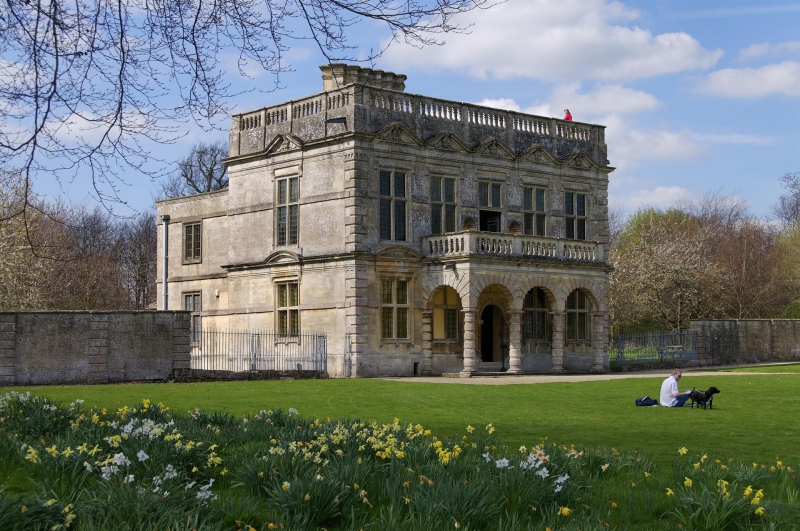
Former grandstand, now house. c1625-1634, altered and extended late C19. Built for John Dutton. Despite much speculation about its architect's identity - the names of Balthazar Gerbier (1592-1663), a contemporary of Inigo Jones; and John Webb (1611-1693), have been suggested, together with Valentine Strong as that of its builder (Fretwell 1990) - it remains anonymous. Converted into house and extended in 1898 by King, for Emily Theresa, Lady Sherborne, further interior alterations undertaken in 1930s. Ashlar with rusticated quoins and moulded plinth. Flat leaded roof to main body. Stone slate roof to game larder. Rectangular main body. Single bay extension of 1898 at rear. Short corridor, open on one side from west to small game larder with square plan set within courtyard wall at rear. Three- bay portico with first floor verandah. Fenestration of main body; cross windows with moulded architraves and square-sectioned architraves. Shallow segmental pediments over ground floor windows either side of entrance portico, moulded cornice continued at same level. Broken triangular pediments over first floor windows. Stone busts of 4 men and one woman set within pediments. Two shell-headed alcoves either side of central window. Balustrade with plain intermediary piers. Portico spanning central 3 bays with 4 banded columns with round-headed arches and rusticated stonework. Parapet matching that above first floor windows. Double part-glazed door with two fielded panels at bottom; within moulded round-headed surround with bag stops and imposts continued as bands either side. Carved keystone and spandrels with stylised foliate decoration. Engaged splat baluster type decoration from impost level to band above door either side of doorway. Single windows to returns of main body. Late C19 extension at rear, 2 storeys. Stone-mullioned cross-windows to ground floor, 2-light stone-mullioned casement to first floor. Two-light stone-mullioned casements with glazing bars at rear. Mid C17 composite stack set back at rear of main body. Later stacks with moulded cappings. Pyramidal roof to game store. Interior; originally comprised two rooms one above the other, the lower room functioning as the hall, the upper room opening onto the balcony. The rooms formerly communicated via a projecting staircase at the north-west corner. The staircase continued upwards to open out via a flat-roofed rectangular access turret onto the roof (now demolished). The interior was divided into two rooms and the upper floor into 3 during the alterations of 1898. The present staircase was inserted in 1930s. On the back wall of the hall were two fireplaces originally surmounted by shell alcoves. The surround of the mid C17 fireplace remains but the overmantel was replaced by a tympanum with the initials 'E.T.S' (Emily Theresa, Lady Sherborne). Double width doorway right of fireplace within stone surround with double bolection moulding with moulded stops and keystone. Reveal above impost level carved to give panelled appearance. Single 6-panel door. Small probably late C19 stone fireplace with bolection moulding within left-hand room. Similar fireplace in an upstairs bedroom. C17 moulded 4- centred arched fireplace with moulded stops and spandrels with raised panels at centre in north wall of upper left-hand room. False ceiling. Subsidiary features; cast-iron railing and ashlar walling. Walls; mid C17, railings probably C19. Railings run for c6m either side of house, boundary subsequently continued as a wall for c20m with intermediary rusticated piers. The wall then returns forwards for c20m terminating in square, banded piers with moulded cappings and ball finials. Similar piers flank openings at corners. Two plank doors within surrounds with moulded architraves in returns. (Property of the National Trust). (David Verey, The Buildings of England; The Cotswolds, 1979; and Country Life, September 26 1963)
Listing NGR: SP1455312272
This list entry was subject to a Minor Enhancement on 26 January 2026 to amend the description and reformat the text to current standards
SP 11 SW
3/174
SHERBORNE
LODGE PARK
Lodge Park and adjoining walls and railings
23.1.52
GV
I
Former grandstand, now house. c1625-1634, altered and extended late C19. Built for John Dutton. Despite much speculation about its architect's identity - the names of Balthazar Gerbier (1592-1663), a contemporary of Inigo Jones; and John Webb (1611-1693), have been suggested, together with Valentine Strong as that of its builder (Fretwell 1990) - it remains anonymous. Converted into house and extended in 1898 by King, for Emily Theresa, Lady Sherborne, further interior alterations undertaken in 1930s.
Ashlar with rusticated quoins and moulded plinth. Flat leaded roof to main body. Stone slate roof to game larder. Rectangular main body. Single bay extension of 1898 rear. Short corridor, open on one side from west to small game larder with square plan set within courtyard wall at rear. Three bay portico with first floor verandah. Fenestration of main body; cross windows with moulded architraves and square-sectioned architraves. Shallow segmental pediments over ground floor windows either side of entrance portico, moulded cornice continued at same level. Broken triangular pediments over first floor windows. Stone busts of four men and one woman set within pediments. Two shell-headed alcoves either side of central window. Balustrade with plain intermediary piers. Portico spanning central three bays with four banded columns with round-headed arches and rusticated stonework. Parapet matching that above first floor windows. Double part-glazed door with two fielded panels at bottom; within moulded round-headed surround with bag stops and imposts continued as bands either side. Carved keystone and spandrels with stylised foliate decoration. Engaged splat baluster type decoration from impost level to band above door either side of doorway. Single windows to returns of main body. Late C19 extension at rear, two storeys. Stone-mullioned cross-windows to ground floor, two-light stone-mullioned casement to first floor. Two-light stone-mullioned casements with glazing bars at rear. Mid C17 composite stack set back at rear of main body. Later stacks with moulded cappings. Pyramidal roof to game store.
Interior; originally comprised two rooms one above the other, the lower room functioning as the hall, the upper room opening onto the balcony. The rooms formerly communicated via a projecting staircase at the north-west corner. The staircase continued upwards to open out via a flat-roofed rectangular access turret onto the roof (now demolished). The interior was divided into two rooms and the upper floor into three during the alterations of 1898. The present staircase was inserted in 1930s. On the back wall of the hall were two fireplaces originally surmounted by shell alcoves. The surround of the mid C17 fireplace remains but the overmantel was replaced by a tympanum with the initials 'E.T.S' (Emily Theresa, Lady Sherborne). Double width doorway right of fireplace within stone surround with double bolection moulding with moulded stops and keystone. Reveal above impost level carved to give panelled appearance. Single six-panel door. Small probably late C19 stone fireplace with bolection moulding within left-hand room. Similar fireplace in an upstairs bedroom. C17 moulded four-centred arched fireplace with moulded stops and spandrels with raised panels at centre in north wall of upper left-hand room. False ceiling.
Subsidiary features; cast-iron railing and ashlar walling. Walls; mid C17, railings probably C19. Railings run for circa 6m either side of house, boundary subsequently continued as a wall for circa 20m with intermediary rusticated piers. The wall then returns forwards for circa 20m terminating in square, banded piers with moulded cappings and ball finials. Similar piers flank openings at corners. Two plank doors within surrounds with moulded architraves in returns. (Property of the National Trust).
(David Verey, The Buildings of England; The Cotswolds, 1979; and Country Life, September 26 1963)
Listing NGR: SP1455312272
External links are from the relevant listing authority and, where applicable, Wikidata. Wikidata IDs may be related buildings as well as this specific building. If you want to add or update a link, you will need to do so by editing the Wikidata entry.


Other nearby listed buildings