Latitude: 53.7916 / 53°47'29"N
Longitude: -1.552 / 1°33'7"W
OS Eastings: 429607
OS Northings: 432900
OS Grid: SE296329
Mapcode National: GBR BHN.5L
Mapcode Global: WHC9D.4Y6P
Plus Code: 9C5WQCRX+J5
Entry Name: Former Foundry Building for Fenton Murray and Wood Engineers
Listing Date: 25 August 1987
Last Amended: 11 September 1996
Grade: II*
Source: Historic England
Source ID: 1375467
English Heritage Legacy ID: 466363
ID on this website: 101375467
Location: Camp Field, Leeds, West Yorkshire, LS11
County: Leeds
Electoral Ward/Division: City and Hunslet
Parish: Non Civil Parish
Built-Up Area: Leeds
Traditional County: Yorkshire
Lieutenancy Area (Ceremonial County): West Yorkshire
Church of England Parish: Hunslet St Mary the Virgin
Church of England Diocese: Leeds
Tagged with: Building
LEEDS
SE2932NE FOUNDRY STREET, Holbeck 714-1/80/836 (East side) 25/08/87 Former foundry building for Fenton, Murray and Wood, engineers (Formerly Listed as: FOUNDRY STREET, Holbeck (East side) Former foundry and attached workshops)
GV II*
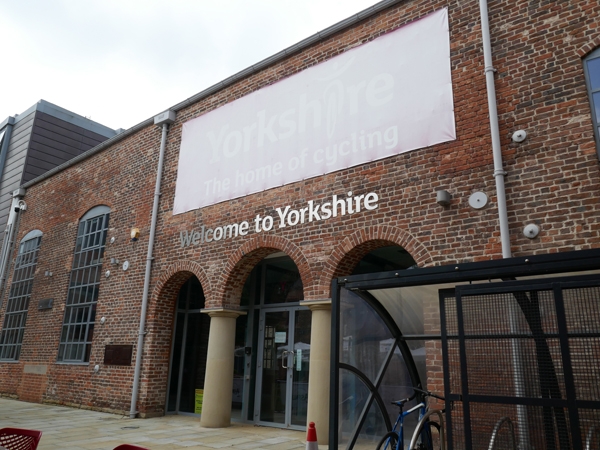
Includes: No.103 WATER LANE Holbeck. Foundry, now motor radiator repair workshop. c1795 with mid C19 modifications. For Matthew Murray's Foundry Street works. Brown brick, irregular 1:5 English bond, hipped corrugated asbestos roof with tall 2-flue stack to rear of ridge, right gable end. A tall single storey building of 5 bays, with a lower lean-to addition at north end. Facade to Foundry Street: tall, segmental, brick, header-arched, multipane windows flanking central full-height, round, header and stretcher-arched entrance, now with glazing and garage doors. 3 tiers of round tie-bar plates. Rear facade, to yard: 3 windows as Foundry Street, that to right obscured by lean-to; central round-arched entrance flanked by slightly lower blocked archways, the central arch supported by stone Tuscan columns with imposts. Left return, to Water Street: tall window as Foundry Street, added lean-to extension. INTERIOR: 5 brick buttresses against long walls have cast-iron shoes, probably for an early travelling crane. This modification of the 1840s is a very early example. Roof replaced. Probably Murray's first building on this site, and part of the world's first integrated engineering works. The building housed the dry sand foundry described in some detail by James Watt junior in a letter of 15 June 1802. The firm of Boulton and Watt was interested in the skills being developed by the Murray workmen and one Halligan, who had previously worked at the Soho Foundry in Birmingham, was persuaded to spy for them. The building was described as 20 yards long and 12 yards wide, containing 2 air furnaces and 3 stoves, one 20 x 13 feet for loam, one 17 x 13 feet for boxes and one 17 x 9 feet for cores. In 1816 a steam engine and boiler outside the south end of the building was in use for blowing the furnaces in this foundry. This foundry building is a rare survival of an early purpose-built workshop, providing good ventilation and weather protection while apparently of some importance as an architectural feature of the works, the stone columns in the triple-arched entrance were intended to be seen from the Water Lane frontage (now blocked), and reflects the use of brick and stone in the White Cloth Hall, Crown Street (qv), of 1775. (Redman, RN: The Railway Foundry, Leeds, 1839-1969: Norwich: 1972-; Netlam and Frances Giles: Plan of the Town of Leeds and its Environs: 1815-; West Yorkshire Archaeology Service: August 1995: Gomersall H: The Round Foundry, Water Lane, Leeds: Building Notes & Comments; Fitzgerald R: pers.comm.).
Listing NGR: SE2960732900
External links are from the relevant listing authority and, where applicable, Wikidata. Wikidata IDs may be related buildings as well as this specific building. If you want to add or update a link, you will need to do so by editing the Wikidata entry.


Other nearby listed buildings