Latitude: 50.3698 / 50°22'11"N
Longitude: -4.1398 / 4°8'23"W
OS Eastings: 247920
OS Northings: 54395
OS Grid: SX479543
Mapcode National: GBR RBR.1L
Mapcode Global: FRA 2862.50W
Plus Code: 9C2Q9V96+W3
Entry Name: Church of St Andrew
Listing Date: 25 January 1954
Grade: I
Source: Historic England
Source ID: 1130012
English Heritage Legacy ID: 473226
Also known as: Minster Church of St Andrew
St Andrew's Church, Plymouth
ID on this website: 101130012
Location: Minster Church of St Andrew's, Plymouth, Devon, PL1
County: City of Plymouth
Electoral Ward/Division: St Peter and the Waterfront
Parish: Non Civil Parish
Built-Up Area: Plymouth
Traditional County: Devon
Lieutenancy Area (Ceremonial County): Devon
Tagged with: Church building
PLYMOUTH
SX4754 CATHERINE STREET, Plymouth 740-1/57/356 (East side) 25/01/54 Church of St Andrew
GV I
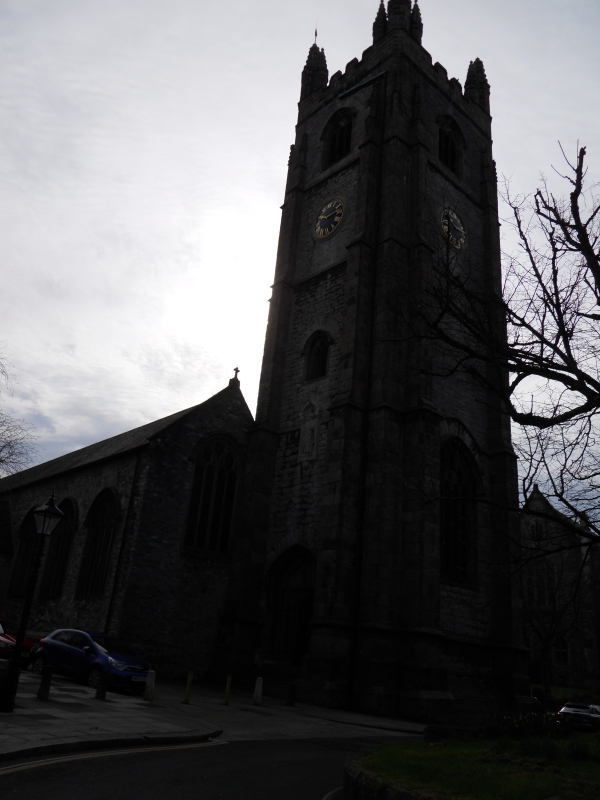
Large parish church, the largest in Devon. Mid C15-late C15 on older site; tower paid for by Thomas Yogge, a merchant, in 1460; John Dew, a mason, worked on the S aisle in 1481-82; John Andrew worked on St Mary's aisle in 1481-82; some restoration by John Foulston in 1826 and by Sir Gilbert Scott in 1875; much damaged in the Blitz and restored 1949-57 by Frederick Eschells. Plymouth limestone rubble walls with granite dressings; dry slate roofs with coped gable ends. PLAN: nave, chancel, N and S aisles, N and S chapels and porches, W tower. EXTERIOR: C15 windows with 1875 Perpendicular style tracery: E end with 5-light windows to aisles and 6-light window to chancel; similar W windows; angle buttresses; other aisle windows with 4-light windows, all windows with hoodmoulds. porches have pointed-arched doorways, the N porch with square hoodmould and carved spandrels. 4-stage tower (136 feet high) with offset corner buttresses; strings dividing stages; embattled parapet with polygonal crocketed corner pinnacles. 4-centred arched N doorway; 2-light traceried windows to next stage; clockfaces to stage above and 3-light louvred and traceried windows to upper stage. INTERIOR: 6-bay arcades between nave and aisles, 2 bays between aisles and chapels and lower arcade of 3 bays between chancel and aisles, all with standard A (Pevsner) type piers and depressed arches; chancel arch; post-war waggon roofs. FITTINGS: destroyed during Blitz. 1661 font found in garden; post-war altar furnishings by Colin Shewring. MONUMENTS: C12 or C13 monument with head on pillow; monument to John Sparke and his wife 1635 with kneeling figures; monument to Jane Barker, died 1769; bust by Chantrey 1829, another to Mrs Risdew, died 1818, also by Chantrey; monument to Dr Woolcombe, died 1822 by Westmacott with 2 standing figures of Medicine and Charity, and various other monuments. STAINED GLASS: E and W windows 1958 designed by John Piper and made by Patrick Reyntiens. HISTORY: just after the damage caused to this church during 1941, the word "RESURGAM" appeared above the N entrance and flowers were planted inside. This simple act inspired the people of Plymouth and raised their moral, and set their minds on repairing the church once the war was over.
(The Buildings of England: Pevsner N: Devon: London: 1989-: 641-642; Power WJ: A Layman's View of Some Plymouth Churches: 1977-: 22).
Listing NGR: SX4792354396
External links are from the relevant listing authority and, where applicable, Wikidata. Wikidata IDs may be related buildings as well as this specific building. If you want to add or update a link, you will need to do so by editing the Wikidata entry.


Other nearby listed buildings