Latitude: 54.1185 / 54°7'6"N
Longitude: -1.5704 / 1°34'13"W
OS Eastings: 428175
OS Northings: 469261
OS Grid: SE281692
Mapcode National: GBR KNGT.SD
Mapcode Global: WHC7T.VRC2
Plus Code: 9C6W4C9H+9R
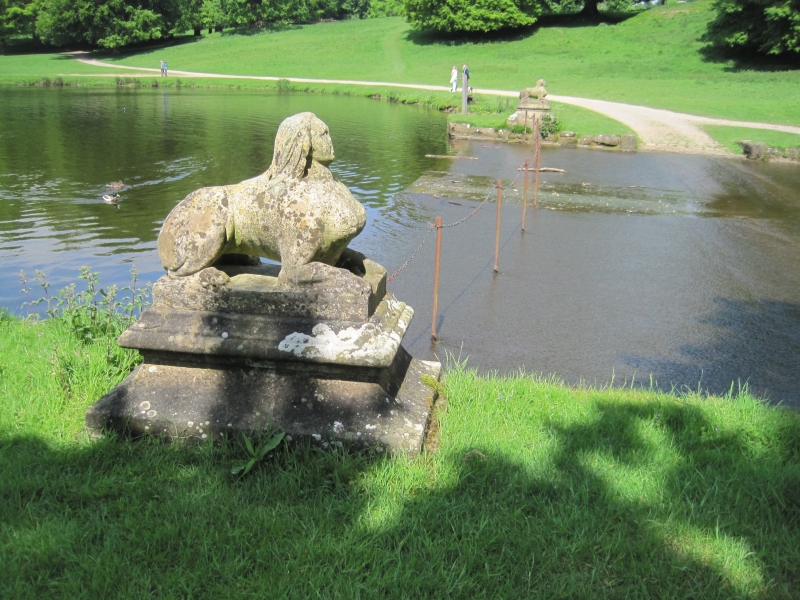
Entry Name: Sphinx and Pedestal on South Side of Waterfall at East End of Lake
Listing Date: 6 March 1967
Last Amended: 11 June 1986
Grade: II
Source: Historic England
Source ID: 1150604
English Heritage Legacy ID: 331060
ID on this website: 101150604
Location: North Yorkshire, HG4
County: North Yorkshire
District: Harrogate
Civil Parish: Lindrick with Studley Royal and Fountains
Traditional County: Yorkshire
Lieutenancy Area (Ceremonial County): North Yorkshire
Tagged with: Architectural structure
SE 2869
9/56
6.3.67
LINDRICK WITH STUDLEY ROYAL AND FOUNTAINS
STUDLEY PARK
Sphinx and pedestal on south side of waterfall at east end of Lake (formerly listed along with 9/55)
GV
II
Sphinx and pedestal. c1727. Probably by John Simpson for John Aislabie.
Ashlar pedestal, limestone figure. Overall height approximately 1.5 metres.
Moulded profile to pedestal. The figure is strongly proportioned, the
weathered head draped with a light head-dress. Records of the Studley
Estate show that John Simpson was making pillars for sphinxes in 1727 but he
may not have been responsible for the statues. Sphinxes are known to have
been placed on the Cascade at the entrance to the Lake (qv) and they flanked
the Drum Falls on the Canal (qv), the latter are probably those removed from
the top of Mackershaw Gate (qv) in 1970 and now in store. G Beard, 'Studley
Royal', Country Life 1961. W T C Walker, personal communication. Sphinx
and pedestal. c1727. Probably by John Simpson for John Aislabie. Ashlar
pedestal, limestone figure. Overall height approximately 1.5 metres.
Moulded profile to pedestal. The figure is strongly proportioned, the
weathered head draped with a light head-dress. Records of the Studley
Estate show that John Simpson was making pillars for sphinxes in 1727 but he
may not have been responsible for the statues. Sphinxes are known to have
been placed on the Cascade at the entrance to the Lake (qv) and they flanked
the Drum Falls on the Canal (qv), the latter are probably those removed from
the top of Mackershaw Gate (qv) in 1970 and now in store. G Beard, 'Studley
Royal', Country Life 1961. W T C Walker, personal communication.
Listing NGR: SE2817569261
External links are from the relevant listing authority and, where applicable, Wikidata. Wikidata IDs may be related buildings as well as this specific building. If you want to add or update a link, you will need to do so by editing the Wikidata entry.


Other nearby listed buildings